

What began as a peaceful day on Cape Cod, Massachusetts, turned into a dramatic battle for survival when over 100 Atlantic white-sided dolphins found themselves stranded on shallow mud flats.
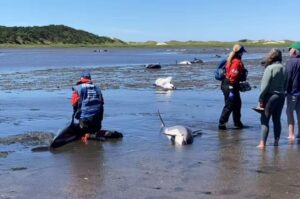
Known for their playful nature and tight-knit groups, these intelligent creatures faced a dire situation under the blazing sun, their usual grace replaced by a desperate struggle to stay alive.
The crisis unfolded early one morning, prompting an urgent call to the International Fund for Animal Welfare (IFAW). Upon arrival, the team was stunned to discover 125 dolphins trapped, far exceeding initial reports. This marked the largest mass-stranding event in IFAW’s 26-year history, a distressing sight for those who cherish these marine marvels. Teaming up with AmeriCorps of Cape Cod, Whale and Dolphin Conservation, and other groups, the rescue effort kicked into high gear, focusing on keeping the dolphins hydrated and calm as they awaited the returning tide.
For 12 grueling hours, volunteers and staff labored tirelessly, their hearts heavy with the uncertainty of the outcome. Mass strandings often end tragically, and the situation teetered on a knife’s edge. Yet, a glimmer of hope emerged as the tide began to shift. By nightfall, most dolphins were guided back to deeper waters, with the remaining few swimming to safety the next day. The rescue team emerged exhausted yet elated, a blend of relief and pride washing over them.
This event underscores the resilience of these dolphins and the critical role of swift action in their survival. As more is learned about their behavior, their plight continues to captivate and inspire.
What If Their Journey Continues?
If we imagine further, picture these dolphins thriving in the open ocean, their playful leaps a sign of recovery, or perhaps guiding researchers to better understand such strandings for future protection.