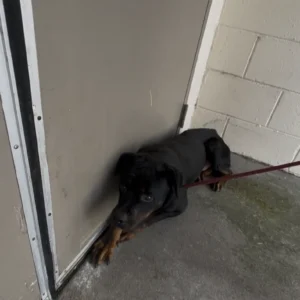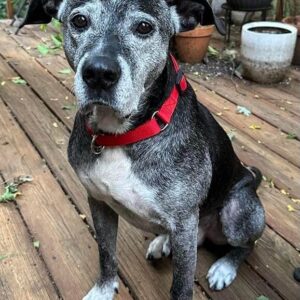

In Tustin, California, a heartbreaking discovery unfolded when an emaciated dog fighting for her life was unexpectedly caught on a wildlife camera. No one could have predicted it. The cameras, placed throughout the Red Rock Wilderness and Loma Ridge Preserve, had been installed to study the movement of coyotes and mountain lions in the area. Instead, they revealed the desperate journey of a stray dog clinging to survival in the wilderness.
The cameras were part of the Orange County (OC) Infrastructure Program, which routinely checks footage every 30 days. The intent was purely scientific—tracking wild animals and their natural behavior—but when the recordings were reviewed recently, officials noticed something unusual. A lone dog had appeared, captured repeatedly on camera, wandering the same rugged terrain as the predators these devices were meant to monitor.
This dog, later named Winona, was first seen in the footage about a month earlier. At that time, she seemed in good health—alert, energetic, and capable of fending for herself. But as the weeks passed, the images painted a far more alarming picture. By the 32nd day, Winona’s ribs had become visible, her body thin and frail. She was moving slower, her eyes no longer bright but weary. Clearly, this was no longer a story of survival—it was a silent cry for help.

Alarmed by what they saw, officials contacted Orange County Animal Care on May 29. The rescue team knew immediate action was needed. They set up a humane trap near the area where Winona had last been spotted. To ease her fears, they carefully placed cozy blankets both inside and outside the trap, along with food that might tempt her to step inside. Their goal was not only to feed her but also to create a small sense of safety in a world that had been harsh and unforgiving.
Days turned into nights as officers checked the trap again and again, hoping each time they would find her inside. They wanted desperately to bring her out of the wilderness, where she faced hunger, exhaustion, and the constant threat of predators. But Winona was cautious. Survival had taught her to be wary, and she hesitated to trust.
Finally, on June 2, rescuers returned with renewed hope. What they found melted their hearts. Winona was there, indeed—but not inside the trap. Instead, she had curled up just outside, resting on one of the blankets the officers had laid down. For the first time in weeks, she allowed herself to sleep, no longer wandering, but surrendering to the comfort of something soft and kind.
This tender moment revealed something more powerful than words: even after enduring hardship and hunger, Winona still longed for gentleness, warmth, and care. The rescuers knew they were close—her decision to rest there meant she was beginning to trust. And that trust would be the first step in saving her life.