
A majestic bald eagle found itself in a perilous situation during a routine rafting trip, nearly succumbing to the powerful tidal bore. Spotted by a group of friends on the water, the bird struggled desperately as waves knocked it down, its feet seemingly trapped in the sand.
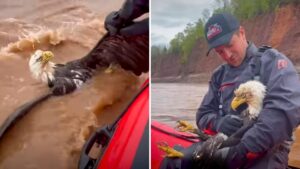
Unlike its companions that soared away, this eagle remained grounded, fighting against the rising tide that threatened to pull it under. The incident unfolded when Emmett Blois and his companions noticed the anomaly, realizing the eagle’s distress was far from normal for such a self-reliant creature.
Acting swiftly, the group waited for the waters to recede before attempting a rescue. They approached with caution, mindful of the eagle’s formidable talons, yet driven by the urgency of the moment. Emmett, drawing on instinct, managed to corral the bird and bring it aboard their raft.
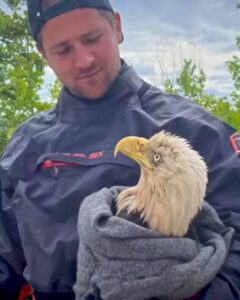
He described how the eagle communicated its preferences non-verbally, guiding him through the process. Once on the boat, the bird’s heart raced under his hand, and it delivered a sharp bite in self-defense, a natural reaction to its fear.
Emmett held the eagle gently for about an hour, allowing its stress to subside as he coordinated help. The close encounter left him in awe, staring into its piercing eyes while marveling at the rare opportunity. Upon reaching shore, the eagle received professional care at Hope For Wildlife Rescue, where examinations revealed ligament damage requiring rest and recovery.
After healing, Emmett released the bird back into its natural habitat along the river, witnessing its triumphant return to the skies. If imaginable, the eagle might now patrol the same waters with renewed vigor, a scenario highlighting nature’s resilience. This rescue reshapes views on wildlife interventions, showing how human empathy can alter fates in unexpected ways.
The story emphasizes the eagle’s vulnerability despite its iconic status, offering insights into avian behavior and conservation challenges. Bald eagles, symbols of strength, occasionally face such threats from environmental factors, as seen here.