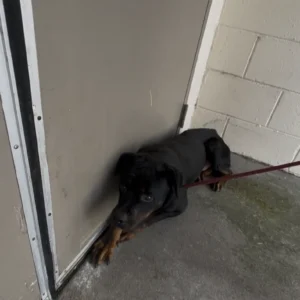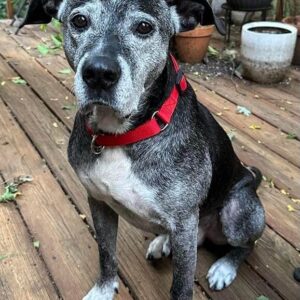

In a quiet St. Louis neighborhood, a heart-wrenching discovery unfolded when Marco, a dog in dire straits, was found tied tightly to a fence.

His frail body trembled, too weak to support itself, with a rope digging cruelly into his neck, restricting his breath.
The scene was grim, marked by deep bite wounds and a face swollen beyond recognition due to a rampant infection coursing through his blood. Every detail of his condition screamed of prolonged neglect and unimaginable suffering.
Local residents, spotting Marco, were moved to tears by the sight. His shallow breaths and sorrowful, exhausted eyes painted a picture of a life teetering on the edge.
This wasn’t merely an abandoned pet; it was a soul silently pleading for rescue. The community’s emotional response underscored the severity of his plight, with onlookers unable to turn away from the tragedy unfolding before them.
The discovery highlighted a critical moment, as Marco’s survival hinged on immediate intervention. His story, etched in every wound and weary glance, revealed the depths of his ordeal.
Veterinary experts would later note that such conditions often stem from prolonged exposure and lack of care, a stark reminder of the challenges some animals face.
His transformation from a vibrant companion to a shadow of himself left an indelible mark on those who witnessed it.
If imaginable, Marco’s past might have included happier days, now buried under layers of pain.
Yet, his presence tied to that fence became a catalyst, drawing attention to the resilience even in his broken state. As the night, the hope for his recovery lingered, a testament to the potential for change even in the darkest moments.
This incident in St. Louis serves as a poignant narrative of survival against the odds.