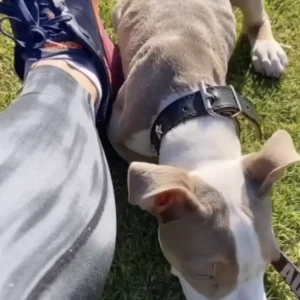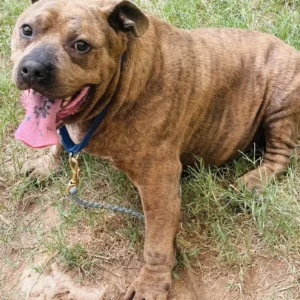

Mila wasn’t supposed to be there. Her bike chain had popped off halfway to her friend’s house, and she was walking it along the backroad when she saw something in the grass.
At first, it looked like trash. Then it moved.
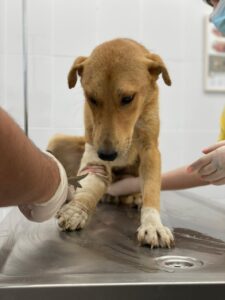
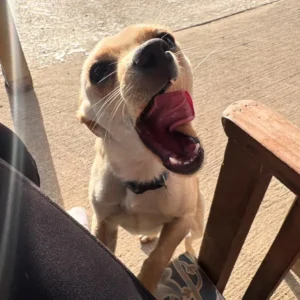
It was a dog—small, muddy, and trembling. One hind leg was twisted unnaturally, swollen and bruised. He tried to stand as she approached, but fell with a silent whimper.
She dropped her bike and knelt down. “Hey, buddy. It’s okay.”
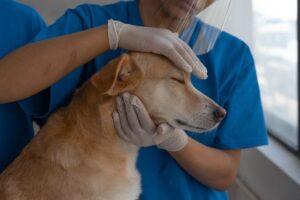
His eyes didn’t shine with fear. They were tired. As if he had already accepted that no one was coming.
Mila called her older brother, who rushed them to the vet.
The x-rays were clear: a complete break. But the vet noticed something else—no signs of road rash, no skid marks, no bruises from impact.
“He wasn’t hit by a car,” the vet said grimly. “Someone threw him.”
Mila felt something tighten in her chest. Who would do that?
She named him Bean, because he was small and soft and curled up like one.
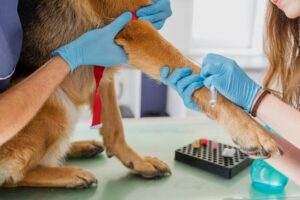
For weeks, she visited the shelter every day after school. Bean didn’t bark. Didn’t wag. But slowly, he began to lift his head when she walked in. Then, one day, he limped to the edge of the crate when he heard her voice.
It was the first time he’d moved on his own.
Two months later, when his leg had healed, Mila took him home for good.
Her parents hadn’t planned for a dog. Mila hadn’t planned to fall in love. But Bean, quiet and scarred, became her shadow—following her from room to room, resting beside her while she did homework.
One night, Mila, usually cheerful, cried quietly in bed. Her best friend had moved away, and she hadn’t told anyone how much it hurt.
But Bean knew.
He limped over and laid his head on her chest.
And in that moment, she realized: Bean wasn’t just the one who needed saving.
So did she.